

Richard casino Plinko game
Introduction
Plinko looks almost too simple to deserve a long analysis. A ball drops from the top of the board, bounces through a field of pegs, and lands in a slot with a multiplier. That is the whole visual idea. Yet after spending time with Richard casino Plinko and comparing it with other fast-session casino games, I can say the simplicity is slightly deceptive. Under that clean interface sits a format built around pacing, distribution of outcomes, and the player’s tolerance for streaks.
For New Zealand players exploring modern instant-win content, Plinko stands out because it removes the usual slot framing. There are no reels, paylines, bonus rounds, or themed symbols competing for attention. Instead, the game puts randomness in plain view. You see the drop. You follow the path. You wait for the final multiplier. That directness is a major part of the appeal, but it also creates a very specific kind of tension that not every player will enjoy for long sessions.
This article is focused strictly on Richard casino Plinko as a game page experience: how it works, why it attracts attention, what the risk settings actually mean in practice, and where the format is strong or limited. My goal is not to sell the idea of Plinko as universally suitable. It is to explain what the game really offers before a player commits money and time to it.
What Richard casino Plinko is and why players notice it so quickly
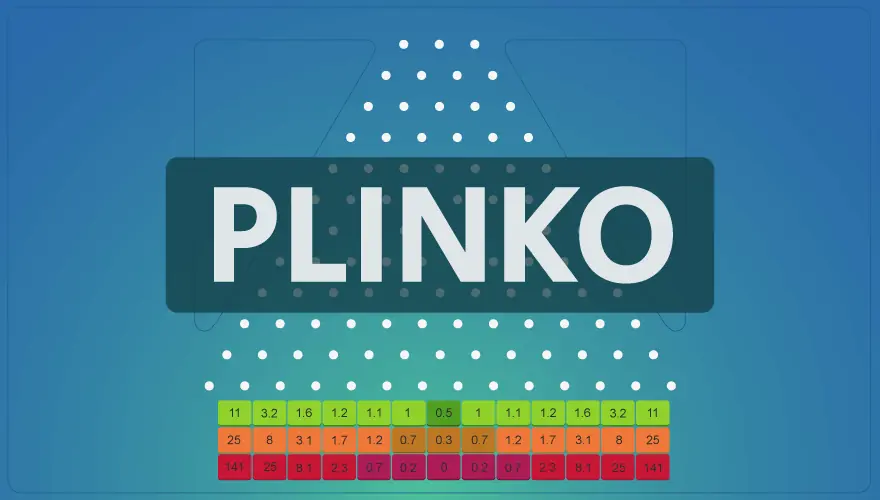
At its core, Plinko is a probability-driven drop game. The player chooses a stake, usually selects a risk level, often adjusts the number of rows, and then releases a ball from the top of the board. As the ball hits the pegs, it moves left or right until it lands in one of the payout slots at the bottom. Each slot corresponds to a multiplier, and the final return is simply the stake multiplied by that value.
Why has Plinko become so visible across online casino platforms? The answer is not just trend value or streamer exposure. The format works because it is instantly readable. A new player does not need to learn paylines, symbol hierarchies, cluster rules, cascading logic, or side features. Within seconds, the entire loop is understandable. That low barrier to entry matters.
But there is another reason it gets attention: Plinko turns randomness into a visible event rather than a hidden calculation. In a slot, the result appears after the spin resolves. In Plinko, the result unfolds in front of the player. The path feels dramatic even when the underlying math remains random. This visible journey creates a stronger emotional link between the action and the outcome.
One of the more interesting observations I have made is that Plinko often feels more “interactive” than it really is. The player makes a few setup choices, but once the ball drops, there is no skill input. The sensation of involvement comes from watching the route, not from influencing it. That distinction is important because it helps set realistic expectations.
How the Plinko mechanics actually work
The mechanics are easy to describe but worth unpacking carefully. A standard Plinko round usually includes four practical elements: stake size, board depth, risk profile, and the final multiplier table. These settings shape the distribution of outcomes far more than the board’s minimalist look suggests. Before you make a deposit, it is worth reading Aviator crash game guide for Richard Casino users for the fee and speed details.
Stake: The amount placed on a single drop.
Rows: The number of levels the ball travels through before reaching the bottom.
Risk level: A setting that changes how the multipliers are distributed across the board.
Multiplier map: The values assigned to the landing slots, from frequent low returns to rare high ones.
When the ball starts falling, each peg collision effectively redirects it left or right. To the player, this looks organic and slightly chaotic. In practical terms, the route is a visual representation of a random outcome generated within the game’s system. The middle slots tend to be reached more often, while the extreme edge slots are usually tied to the rarest and largest multipliers.
This is where many newcomers misunderstand the format. They see a symmetrical board and assume all outcomes are reasonably balanced. They are not. The centre is typically where lower or moderate multipliers cluster, because those landing zones are statistically more common. The outer edges can carry the eye-catching top values, but the path to them is much less frequent. The board is simple to read, yet the return profile can be sharply uneven.
| Element | What it changes | Why it matters in a real session |
|---|---|---|
| Stake size | Cash value of each drop | Directly affects how quickly the balance moves up or down |
| Rows | Number of bounce decisions on the board | Can alter the shape of the outcome spread and session feel |
| Risk setting | Distribution between common low returns and rare high multipliers | Changes whether the session feels steady, swingy, or highly volatile |
| Multiplier layout | Potential return for each landing slot | Defines the practical upside and the frequency of small recoveries |
From my perspective, the most important thing to understand is that Plinko is less about a single dramatic hit and more about how the distribution behaves over repeated drops. One round tells you almost nothing. A session tells you what kind of rhythm the chosen settings create.
Why the game feels engaging and how its pace affects decision-making
Richard casino Plinko can feel unusually absorbing because the game loop is short, visual, and repeatable. A drop resolves quickly. There is almost no downtime. No long intro animation, no reel spin sequence, no bonus tease. That creates a fast cadence, and fast cadence changes player behaviour.
In slower formats, players have more natural pauses to think. In Plinko, the next round is always close. That makes the session feel smooth, but it can also reduce reflection between bets. The game does not pressure the player through noise or clutter. It does something subtler: it makes repetition feel frictionless.
This is one of the strongest and most overlooked aspects of the format. Plinko does not need a complex bonus system to keep attention. The anticipation is packed into the drop itself. Even when the stake is small, the eye follows the ball because the outcome is unresolved until the very end. It is a compact form of suspense.
A second memorable observation: Plinko often creates more tension on near-misses than many slots do. When the ball bounces close to a high multiplier and then falls back toward the middle, the player experiences a visible “almost” moment. Mathematically, that near-miss is just part of the random route. Psychologically, it can feel personal. That emotional effect is one reason the game holds attention so well.
Risk levels, probabilities, and what they mean beyond the interface
The risk selector is the point where Plinko stops being merely simple and starts becoming strategically relevant. Most versions offer low, medium, or high risk. Some add more granular options. These labels sound straightforward, but players should not treat them as cosmetic settings. They change the entire character of a session.
On lower risk settings, the multiplier table is usually flatter. You will often see more frequent small returns and fewer dramatic values at the edges. This does not mean the game becomes safe in any absolute sense. It means the balance may fluctuate less violently over short stretches.
On higher risk settings, the board typically becomes more extreme. Lower-value landings dominate the common results, while the top multipliers become much larger but harder to hit. In practical terms, the game shifts from “frequent modest feedback” to “longer dry runs with occasional spikes.” That can be exciting, but it also increases the chance that a bankroll disappears quickly if the player chases the top end of the table.
It helps to think of Plinko not as a prediction game but as a distribution game. The question is not, “Will the next ball hit the big multiplier?” The useful question is, “Am I comfortable with the pattern of outcomes this setting tends to produce over many drops?” That mindset is healthier and more realistic.
| Risk profile | Typical session feel | Common player reaction |
|---|---|---|
| Low | More stable, smaller swings, fewer standout moments | Often preferred by players testing the format or controlling balance movement |
| Medium | Balanced between routine returns and occasional stronger hits | Usually suits players who want variety without extreme exposure |
| High | Sharper swings, longer low-return stretches, rare but larger upside | Attracts players seeking intensity, but can punish impatience quickly |
The odds on any given Plinko drop are fixed by the game's internal configuration, not by what happened on the previous drop. Most players expect a hot or cold streak to shift the balance, yet each bounce remains independent of the last. In practice, the visible board simply illustrates a pre-set mathematical distribution, so a long run of one direction does not make the opposite outcome any more likely.
How risky Plinko really is and who is likely to enjoy it
Plinko can range from moderately manageable to very aggressive depending on settings. That is one reason broad statements about the game are often misleading. Saying “Plinko is risky” is incomplete. Saying “Plinko can become highly volatile, especially with elevated risk settings and larger multipliers” is closer to the truth.
For players who enjoy short rounds, visible randomness, and direct control over session style, this format can be a strong fit. It is especially appealing to people who find traditional slot themes distracting or repetitive. Plinko strips the experience down to outcome distribution and pace.
It may be less suitable for players who want layered bonus rounds, narrative presentation, feature variety, or the sense of progression that many video slots provide. If a player enjoys unlocking free spins guide for Richard Casino accounts, collecting symbols, or triggering multiple side events, Plinko may feel too bare after the initial novelty wears off.
A third observation worth remembering: Plinko is one of those games where boredom and overexcitement can appear in the same session. On low settings, some players may find the repetition too plain. On high settings, the same game can become emotionally sharp enough to encourage poor chasing behaviour. The format is simple, but the player response to it can swing surprisingly hard.
What players should understand about session rhythm and potential outcomes
The rhythm of Plinko matters almost as much as the math. Because rounds resolve quickly, even a modest stake can compound into substantial exposure over a short period. A player may feel they are betting small, but if they are dropping ball after ball with little pause, total spend rises faster than expected.
This is why pacing discipline is more important here than the interface suggests. Before launching a session, I would strongly advise deciding three things in advance:
Stake size relative to bankroll: Fast rounds amplify poor sizing decisions.
Risk level: This defines the emotional and financial shape of the session.
Session limit: A stop point helps prevent endless chasing after a visible near-hit.
Potential results in Plinko are often distributed in a way that makes small recoveries common enough to keep the session moving, while the standout multipliers remain rare enough to feel meaningful. That structure is effective entertainment design, but it can blur the player’s sense of net position. Frequent modest returns may soften losses without actually reversing them.
In practical terms, the player should track the overall balance movement rather than focusing on isolated satisfying drops. A few decent multipliers can feel like momentum, yet the session may still be negative if the number of attempts is high.
How Plinko differs from slots and other casino game formats
The cleanest comparison is with classic slots. Slots are built around reels, symbol combinations, and feature triggers. Their appeal often comes from layered presentation: theme, sound design, animations, bonus rounds, and varying hit types. Plinko removes almost all of that. It offers a stripped-back loop where the central event is the drop itself.
Compared with roulette, Plinko shares the appeal of a single quick resolution, but the experience is more visual and less abstract. Compared with crash games, Plinko feels less about timing and more about accepting a fixed random path. Compared with blackjack overview, it requires less rules knowledge and far less decision depth.
That difference leads to a distinct player experience:
Less thematic immersion than slots, but more transparency in how the result unfolds.
Less strategic input than blackjack or poker, but easier access for casual players.
Less timing pressure than crash formats, though the session speed can still be intense.
More visible suspense than many instant-win games, because the ball’s route creates a mini-drama every round.
For me, the biggest difference is this: slots often hide variance behind spectacle, while Plinko presents variance almost naked. That honesty is refreshing, but it also means the player feels the swings more directly.
Practical strengths and weak points of Richard casino Plinko
Every game format has trade-offs, and Plinko is no exception. Its advantages are real, but so are its limitations. Looking at Richard casino Plinko from a practical player perspective, I would break it down like this.
| Strengths | Limitations |
|---|---|
| Very easy to understand from the first round | Can feel repetitive if a player wants feature variety |
| Fast session flow with immediate feedback | Fast flow can lead to overbetting or loss of pacing control |
| Risk settings let players shape the session style | High-risk settings may create unrealistic expectations around top multipliers |
| Clear visual presentation of the drop and result | Visible near-misses can encourage emotional decision-making |
| Works well for short, focused sessions | May not satisfy players looking for depth, story, or feature progression |
The strongest point is clarity. Richard casino Plinko does not waste time explaining itself. The game loop is immediate, and the player quickly understands what each setting changes. That is useful for both newcomers and experienced casino users who want a more direct format.
The main weakness is sustainability for certain player types. If someone needs evolving gameplay to stay engaged, Plinko may start to feel one-dimensional. The game can produce excitement, but it does so within a narrow structure. Whether that is elegant or limiting depends on the player.
What to check before starting a Plinko session
Before playing Richard casino Plinko for real money, I would focus on a few practical checks rather than rushing into repeated drops.
Review the multiplier layout: Do not be distracted only by the maximum value. Look at what occupies the centre and how often lower returns are likely to appear.
Understand the chosen risk profile: Low, medium, and high are not mood labels. They reshape the return pattern.
Use demo mode if available: This is one of the best formats for testing rhythm and comfort before staking real money.
Set a session length: Plinko’s speed can flatten your sense of time.
Keep expectations realistic: A visible path does not mean a readable pattern, and a near-edge bounce is not a sign that a big multiplier is “due.”
This last point matters more than it may seem. Because the game gives the illusion of watching chance happen live, some players start assigning meaning to recent paths. In reality, each drop should be treated as an independent event within the game’s random structure. If a player begins to believe the board is warming up or favouring one side, that is usually a sign to pause rather than increase the stake.
Final verdict on Richard casino Plinko
Richard casino Plinko offers a very specific type of casino experience: fast, visual, stripped back, and heavily shaped by the player’s chosen risk setting. Its key strength is not complexity but clarity. You know what the round is, you see it unfold, and you understand immediately how the session is behaving. For players who value directness and quick decision cycles, that is a genuine advantage.
At the same time, the game demands caution precisely because it looks so approachable. The clean board and simple controls can hide how quickly repeated drops add up, especially when higher-risk settings are involved. Plinko is not difficult to learn, but it is easy to underestimate.
I would recommend it most to players who enjoy short-form randomness, visible suspense, and a more transparent alternative to classic slots. I would be more cautious for players who chase big multipliers emotionally, prefer feature-rich gameplay, or tend to confuse near-misses with meaningful signals.
In short, Plinko is worth trying if you want a casino format built around pace, probability, and concentrated tension rather than reels and bonus layers. What it really offers is not depth in the traditional slot sense, but a clean and surprisingly sharp test of how comfortable you are with variance once it is placed right in front of you.
FAQ
What is the main goal in Richard Plinko ball drops?
Drop the ball from the launcher and aim for higher multipliers by landing in higher slots. Each round settles into a new multiplier outcome based on the ball path.
How does the multiplier scoring work in Plinko, and where is it shown?
The multiplier is determined by the slot where the ball lands at the bottom. The result is displayed after the ball settles, and the round history updates on completion.
Is there a risk level difference between demo mode and real-money play for Plinko?
Demo mode uses balance for practice and does not affect real funds. Real-money play follows the same Plinko mechanics, but stakes and any bonus rules attached to your account will apply.
Do Plinko rounds use fixed bet placement, or can the stake be changed per ball?
Bets are set before each round, and the stake can be adjusted for the next ball drop. The game then processes the outcome for that specific wager.
Before the first click, what detail should be checked on the Plinko interface?
Check the current stake or bet amount, plus the selected mode such as demo or real-money. Also confirm the round count or auto-drop setting if it appears.
How can a player start quickly in real-money Plinko without getting lost in settings?
Select real-money mode, set the desired stake, then press the drop button to launch the ball. If a login prompt appears, sign in first so the real-money session can load.
When a Plinko bonus is available, how is it applied to ball drops?
Bonus-funded rounds depend on the offer activation status tied to the casino account. If an offer requires a promo or bonus code, it must be applied before playing the real-money Plinko rounds that qualify.
Can Plinko be played on the mobile casino app, or is the mobile site enough?
Plinko works on mobile through the official interface and can be played in the mobile casino app if available on the device. A browser-based mobile layout may look simpler, while the app can keep account access faster.
What convenience factors affect speed and smooth ball drops in Plinko?
Stable internet, a recent browser version, and allowing essential game loading assets can improve responsiveness. A faster device often keeps animations smooth, especially when multiple rounds are queued.
Which Plinko terms should be understood before choosing real-money play: multipliers, volatility, or table limits?
Multipliers describe the payout factor tied to the slot outcome, while volatility indicates how variable results can feel over time. Table limits affect the minimum and maximum wager for Plinko rounds, so they influence what stakes are allowed on your account.